Download Our Catalogs:
Waveguide Products Catalog Coaxial Components Catalog MegaSeals®Innovative Solutions
Visit us at our Booths
Upcoming Events »MEGA Industries awarded major contract
Mega Industries is pleased to announce the receipt of an award for 3,938 individual waveguide components totaling more than $4.1 million to be delivered to the European XFEL.
Learn More »U.S. ITER Project
Spotlight on Maine for Mega Industries’ Contribution to the U.S. ITER Project.
Learn More »Science & Technology
Read about the latest advancements in science with photons:
Visit www.esrf.eu »A leader in the manufacture of
Microwave Transmission Equipment since 1989...
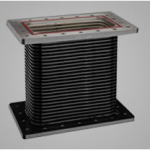
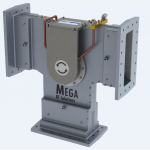
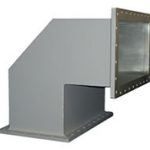
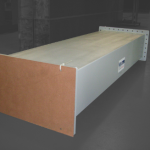
Rigid Waveguide components available in sizes WR90 through WR2300.
See our Rigid Waveguide Products »Quality is our priority. Our Waveguides have been in service
for over 25 years....
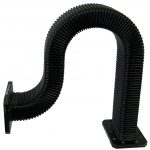
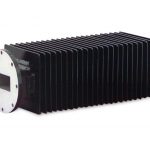
Flexible Waveguide available in sizes
WR90 through WR2300 for demanding waveguide interconnections.
Globally known and trusted with equipment in universities and businesses worldwide....
Coaxial Components available in sizes
Type N through 12 inch.
An experienced engineering design team provides solutions with stable performance...
With excellent performance over the full
400 kHz IBOC passband, our FM/HDR products are available from below 2kW to 40kW and beyond.
Innovative custom solutions are our specialty...
Manufactured to:
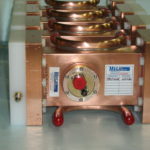
Pressure: 3 Bar (SF6) Gauge
Tested @ 10-9
Water cooled
12” Coax Gas Barrier
Mega Industries, LLC, a world leader in RF Equipment manufacturing, is very proud of a groundbreaking new design for a 12” coaxial gas barrier. This item, designed and manufactured under contract with Oak Ridge National Laboratory as a part of the US ITER project, will allow the pressurization of this large coax at sufficiently high pressures to carry the extraordinarily high RF power necessary to enable the next phase of fusion energy research to continue. These gas barriers use a special ceramic material to withstand the high temperature operating conditions close to the fusion reactor. The devices, which will be used to separate different gas cooling circuits, also serve another purpose as a secondary tritium boundary in certain areas close to the reactor.